Zombitron is an open-source project allowing the design of new interactive devices made with obsolete smartphones.
This project was started during the period I worked at the web agency Noesya (Paris), as part of the research axis I initiated to design more sober interactive interfaces. The website zombitron.org is the property of noesya and is not updated anymore with my work.
I now continue this project as part of my academic research topic addressing the design of tools to favor more sober techniques in artistic and system design practices.
The aim of Zombitron is to enable new systems to be designed from obsolete smartphones and tablets, taking into account their heterogeneity. Given that these devices offer many possibilities in terms of connectivity and interactivity, the objective is to explore how we can continue to benefit from them. Zombitron aims to make the design of new systems based on these devices accessible by facilitating access to the functionalities of the black box that are smartphones and tablets, and to become an open-source and collaborative tool enabling artists and everyone to address these issues of obsolescence in the case of the smartphone.
Basic principle
The Zombitron principle is based on the fact that whatever the release date of a smartphone and its OS, it has a WiFi card and a browser. From there, it is possible to connect these smartphones and tablets to a server that displays web interfaces and exchanges information via the WiFi connection.
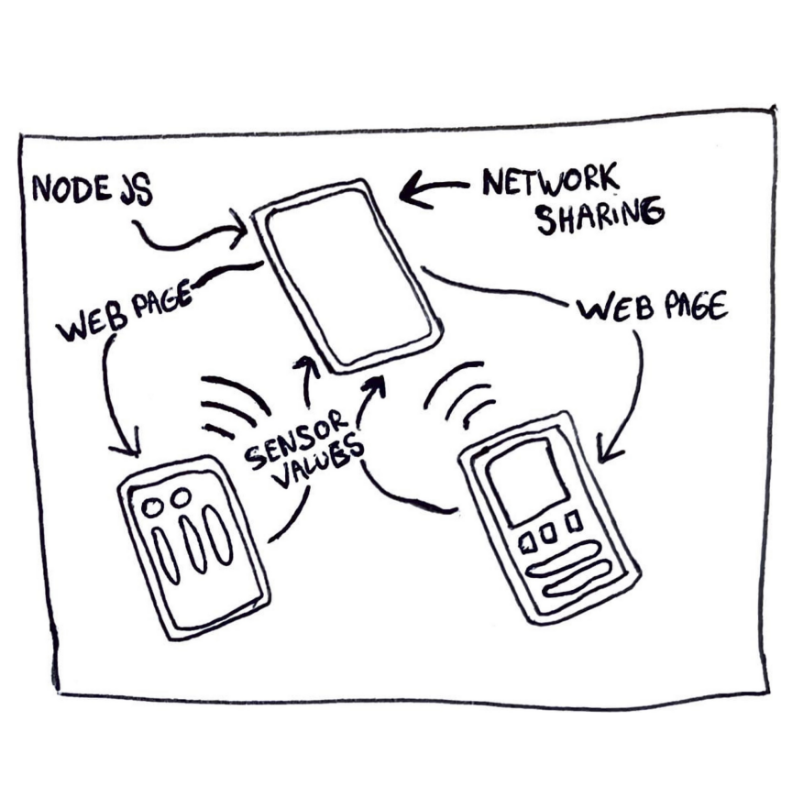
As shown in the drawing bellow, the system is composed of different units that can be any connected device with a browser:
A unit that acts as a hotspot so that others can connect to it locally.
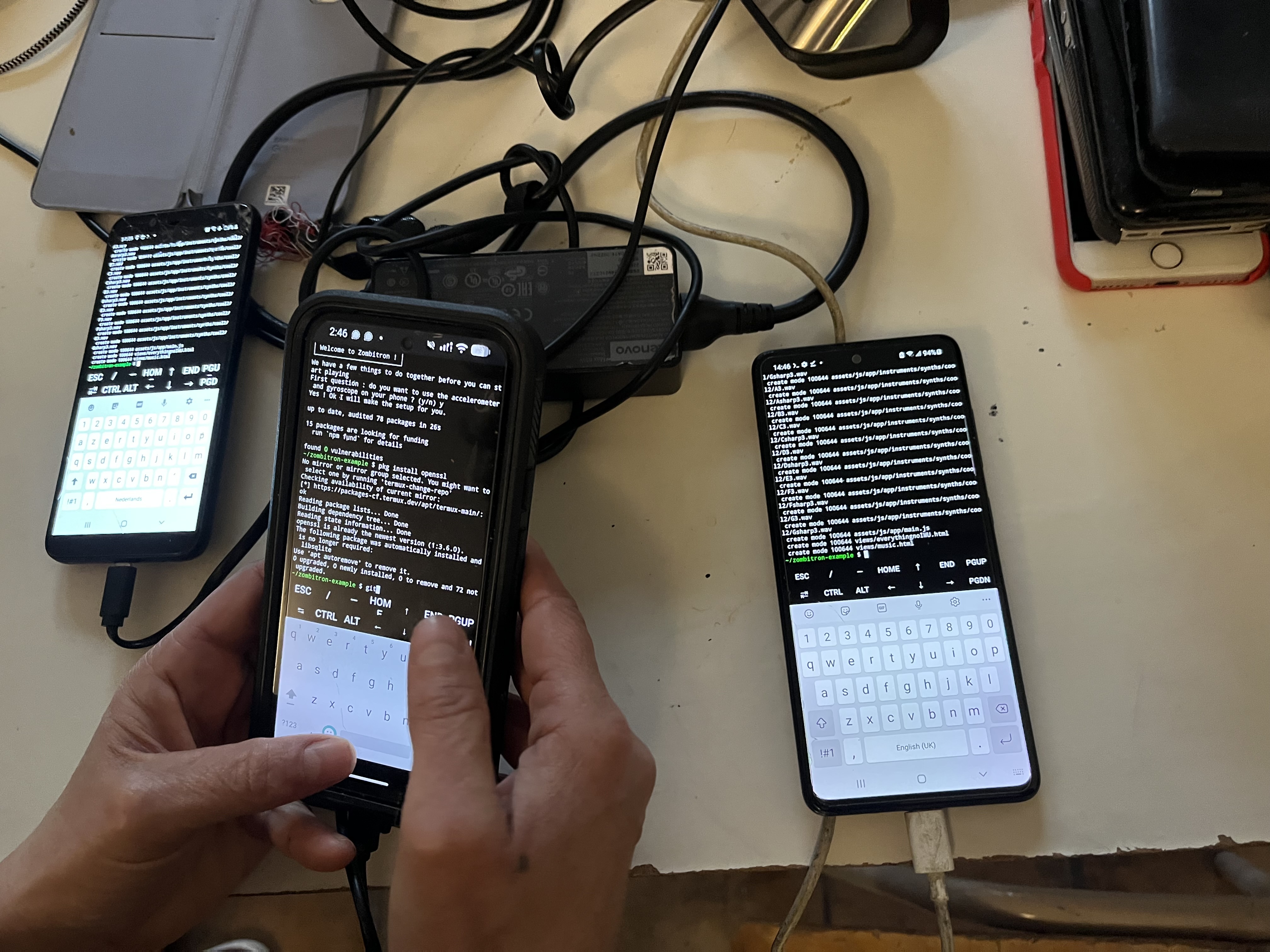
A unit that runs a terminal enabling a Node.js instance to be run and an http server to be generated on this network, also enabling the websocket protocol.
One or more units that will connect to the server as web clients.
For example, depending on its configuration, a unit can act as a hotspot (1), run the server (2) and display a web interface (3). It is also possible to use a computer to run the server and an external router to create a local network.
Web based tool to support system design with obsolete smartphones
The advantage of an approach based solely on web technologies is that it significantly reduces the variability of parameters related to the different device models and OS versions that need to be taken into account.
Since 2008 and the release of the first smartphone, these devices have evolved significantly in terms of components and software specifications.
Browsers have also changed, but have had the advantage of homogenizing around the same languages, protocols, and standards: the World Wide Web Consortium.
However, there are still many parameters to consider depending on the obsolete models you want to reuse with Zombitron, such as its ability to run Node.js, its security protocols, its ability to share its Wi-Fi connection, etc. For this tool to be truly useful, it must be able to automatically anticipate these particularities (in order to simplify use) and, if necessary, document the steps simply to adapt the setup to a specific device.
In a work that I present in more depth in this publication:
Zombitron: towards a toolbox for repurposing obsolete smartphones into new interactive systems
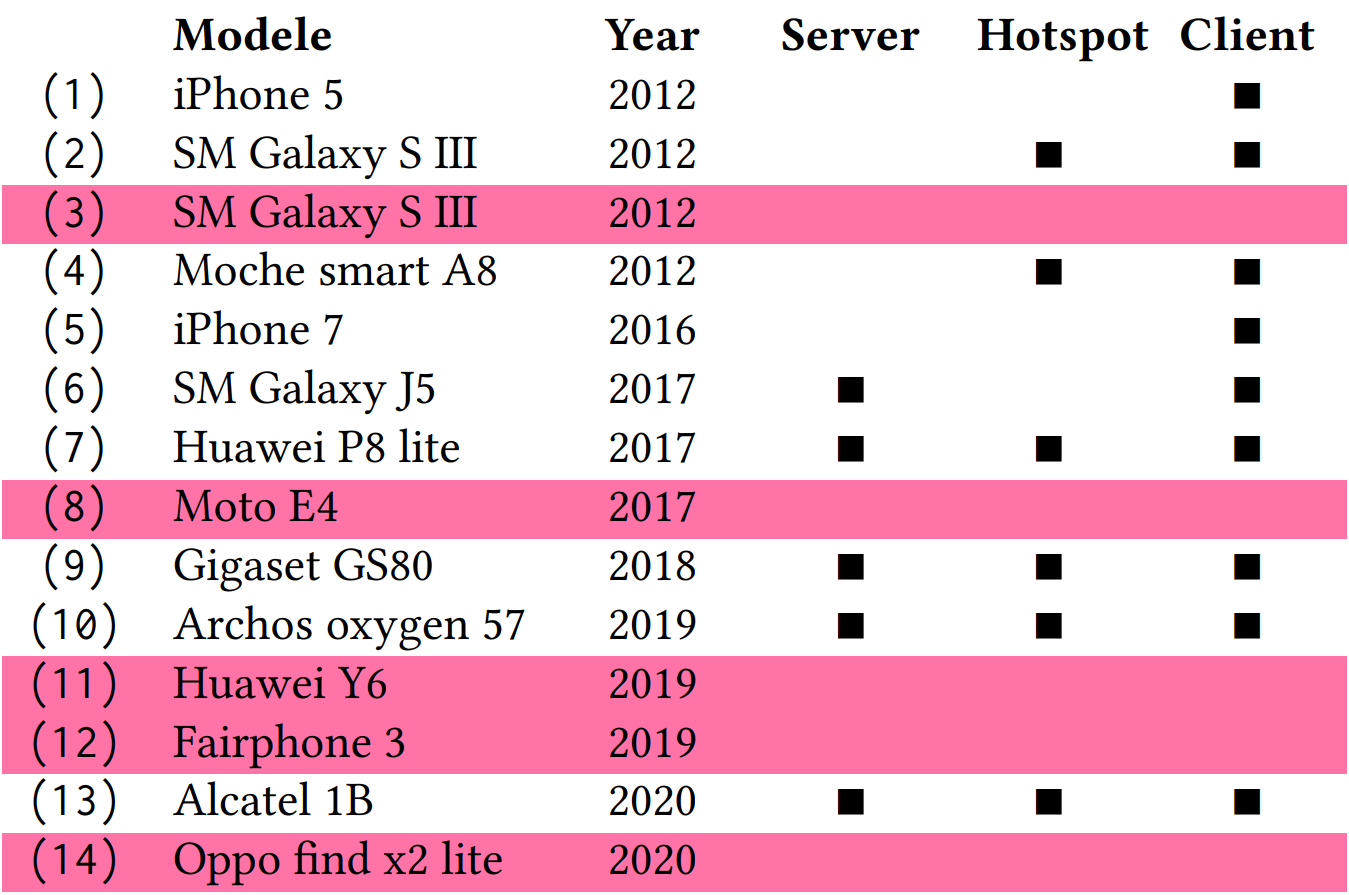
, I have started to test the approach of Zombitron on a selection of various smartphones, to document, step by step, the specifics in terms of installation and configuration that I may encounter. I collected a set of 14 smartphones that had been given to me or that I had bought cheaply second-hand. For each of the phones, I went through the different stages to set up the basis of the Zombitron principle.
The next step in this project is to develop and augment this program base as we go along and as prototypes are designed: [see Zombitron on github]b, and through educational workshops with an audience of creative people and musicians.
This action research approach makes it possible to identify both technical obstacles to improving the tool and making it more accessible, and to explore new ways of interacting with a combination of smartphones in order to integrate them technically into the tool.
Prototypes of musical instruments
While the Zombitron tool focuses primarily on the hardware aspects and the design of controllers for sending data, the project immediately took the direction of musical instruments.
The design of electronic musical instruments has several advantages for exploring the reuse of obsolete smartphones:
they offer numerous opportunities for interactive exploration, through touchscreen controls, but also through various inertial sensors for movement, microphones, and cameras, which are already present on early smartphones.
Furthermore, music synthesis is a good way to explore the limits of machine computing performance, and therefore a good medium for exploring the combination of different devices, both old and new.
The music community is also a perfect playground as this community is already prepared to explore new ways of playing and has a technical foundation.
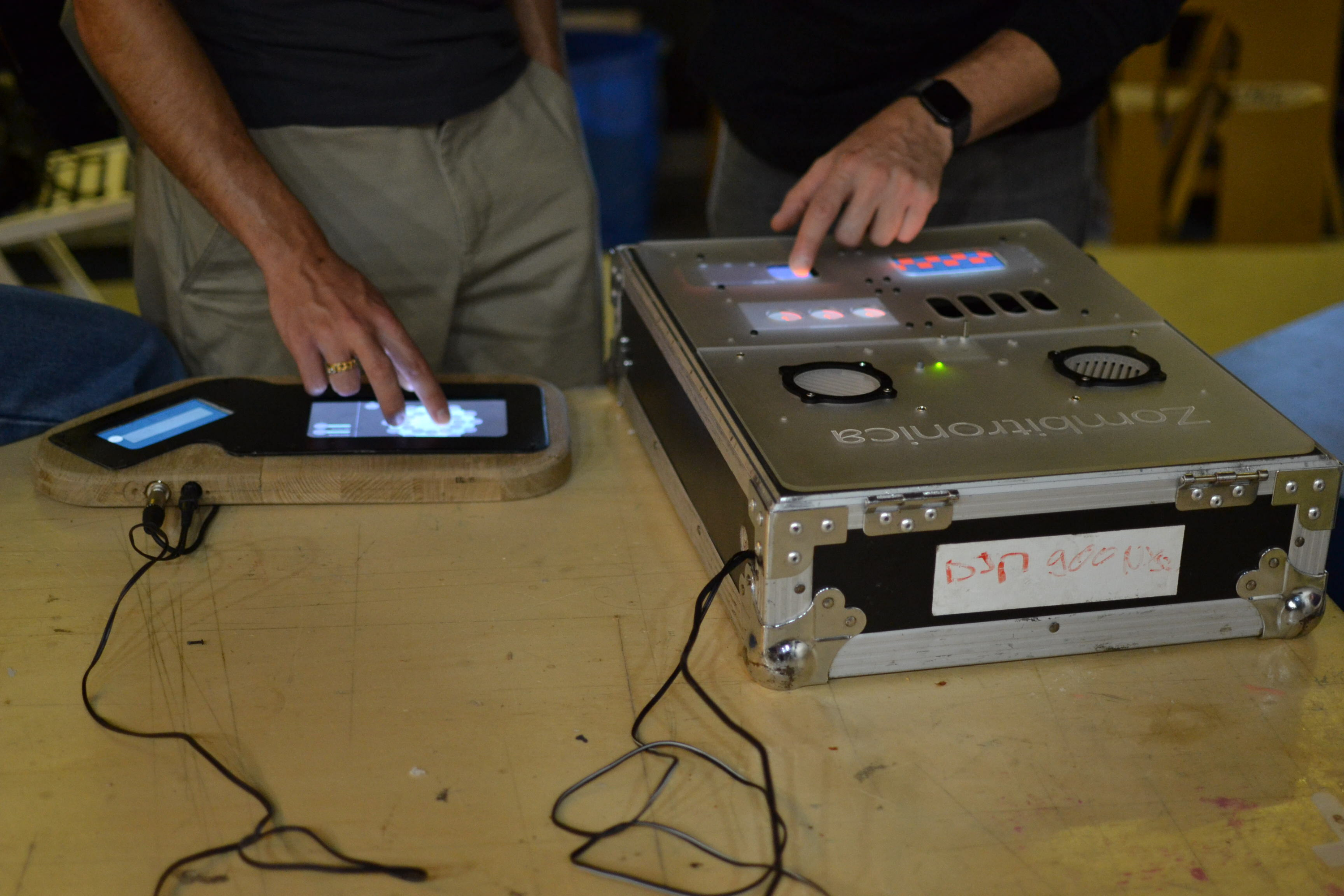
To date, three prototypes have been produced: in 2024: Zombitronica and Zombichord that were made as part of a residency at Villette Makerz (Paris). The design of the latest is the result of a collaboration between my intern Marion Jolas and Romain Segaud.
These first two prototypes were essentially proofs of concept to validate the possibility of connecting devices, and for the time being only implemented interaction via the touch screen.
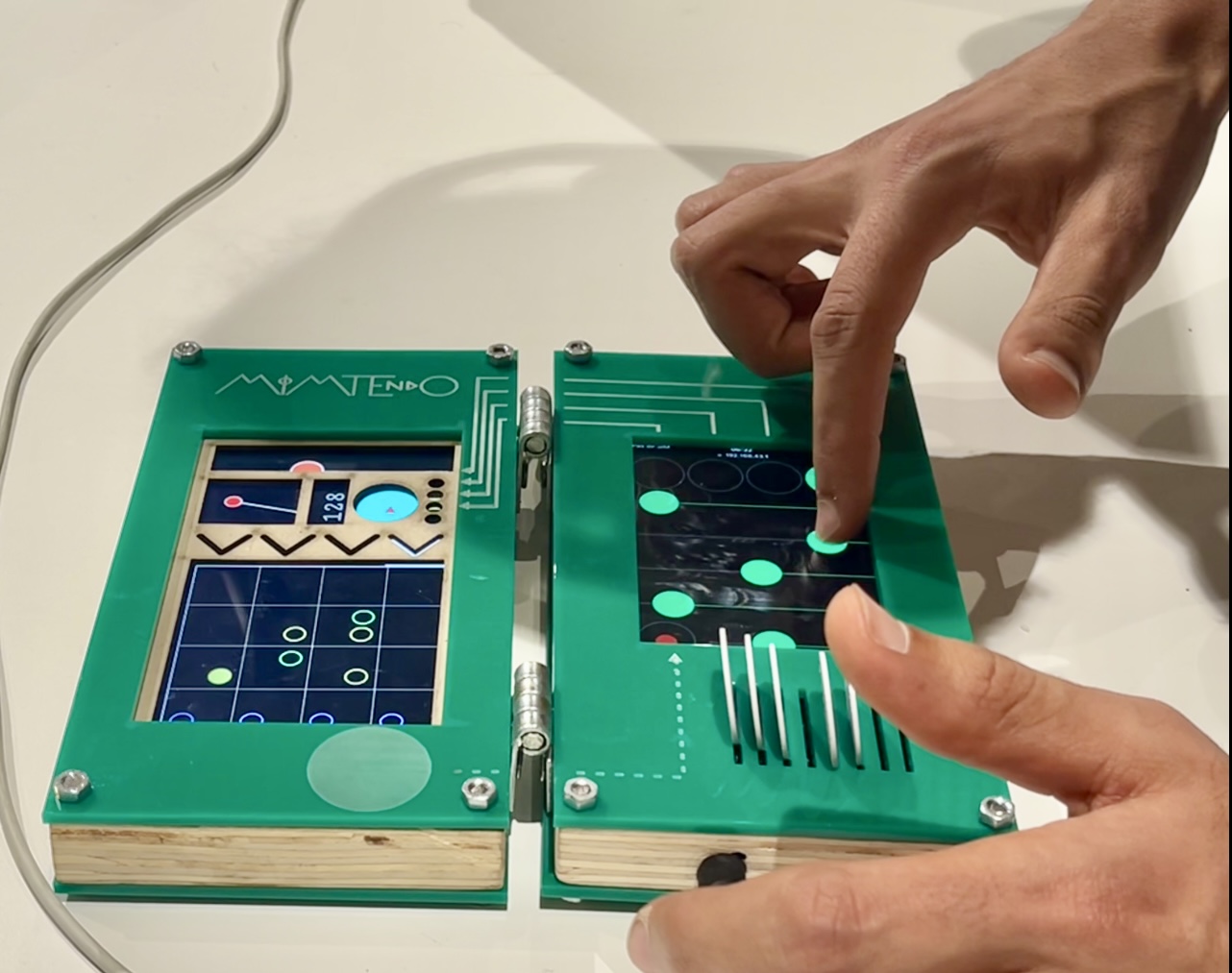
In 2025, I started working on the Zombitron library, and based on that, I built
MIMTEndO
, which, in addition to the touch screen, integrates gyroscopes and NFC chip read/write capabilities, as well as more in-depth work on sound design and optimization.
For music synthesis, these prototypes are built using the Tone.js library dedicated to sound synthesis through web audio.
Workshops around Zombitron
This year, as the tool begins to take shape, I am starting to organize workshops for the public.
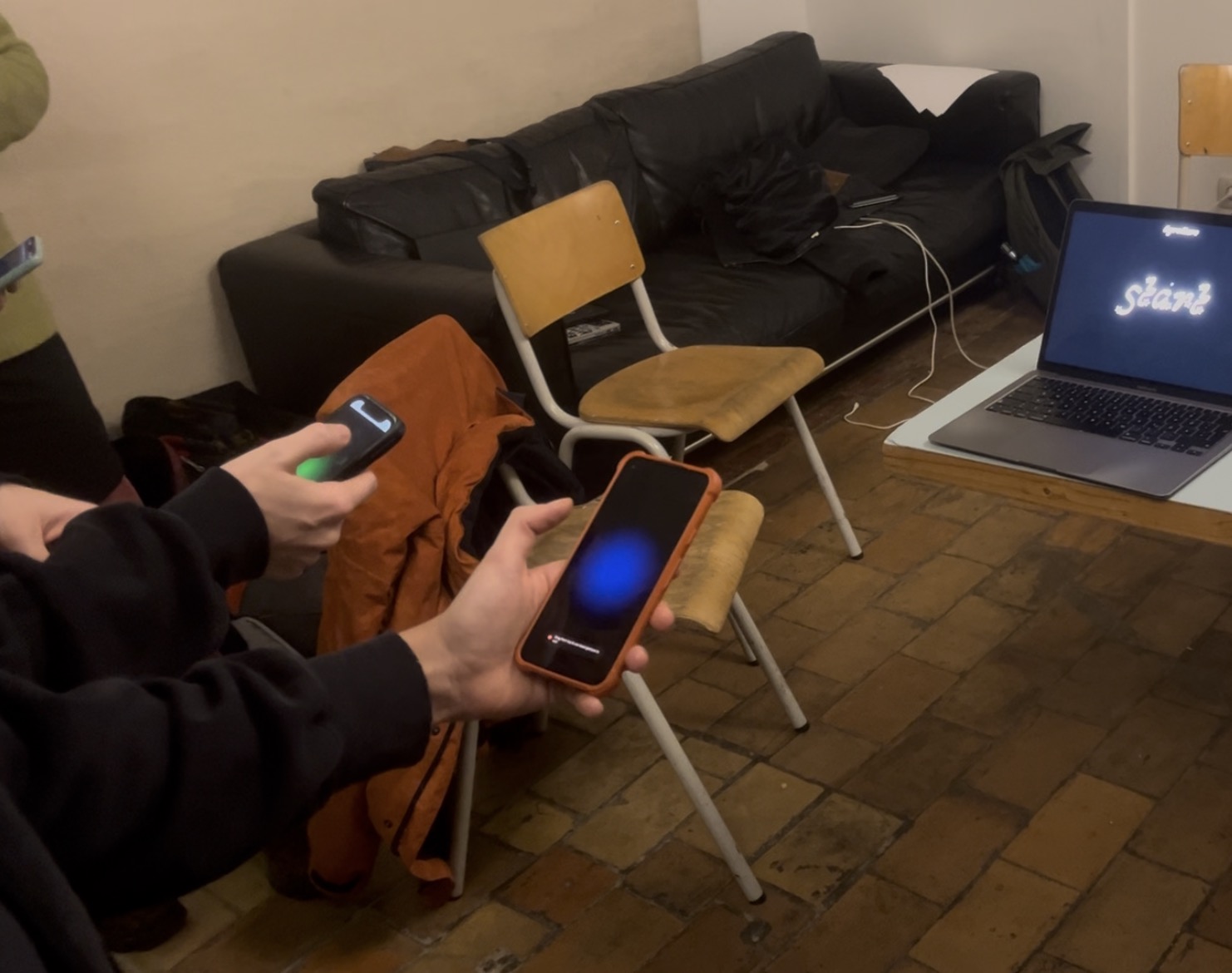
The most recent one took place in Constant (Bruxelles), and gave rise to new perspectives, in addition to the richness of the moment of collaboration around system design.
Three prototypes were designed based on Zombitron: a collaborative music game, an instrument based on fabric sensors designed on site with Wendy Van Wynsberghe, and a drum machine that responds to emotional states.
The goal was also to explore how to extend Zombitron to new sensors by interfacing it with ESP 32s, which was a success thanks to the help of Rebekka Jochem, who came to collaborate on this for the occasion.
These two days were also an opportunity for everyone to learn what’s inside a smartphone and imagine how to design with its sensors, understand how to connect devices on a network, and even for the most motivated, explore new features, such as the microphone that I hadn’t yet set up in the library.